
Multi-spectral imaging modules from IRmodules support a range of scientific research and instrumentation applications — from gas spectroscopy to material science, from medical thermography to precision thermal measurement.

Different research applications require different spectral bands. SWIR (0.9–1.7 μm) excels at gas absorption spectroscopy and material sorting. MWIR (3–5 μm) provides precision radiometric temperature measurement and is sensitive to gas emissions at elevated temperatures. Polarimetric LWIR adds a material discrimination dimension unavailable in conventional thermal imaging.
Typical Deployments
- Atmospheric gas analysis: SWIR absorption spectroscopy for non-contact measurement of CO₂, CH₄, and H₂O vapor concentrations
- Material characterization: polarimetric LWIR discriminating materials with similar thermal signatures but different surface properties — semiconductor, composite, and surface-science research
- Thermal metrology: cooled MWIR modules with precise radiometric calibration for temperature-measurement research
- Wildlife & ecology: nocturnal animal behavior studies — body heat detected through foliage that hides animals from visible cameras
- Medical thermography research: whole-body or regional thermal imaging for inflammatory and vascular studies
What the Camera Sees: Lab Examples
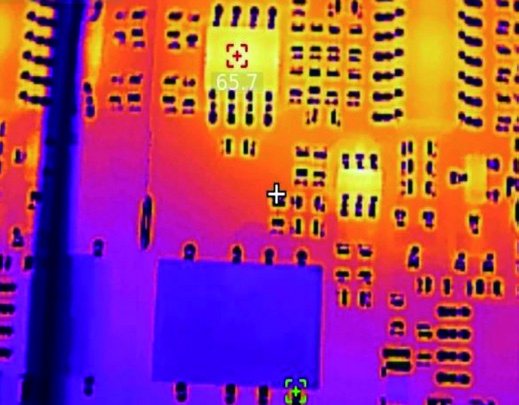
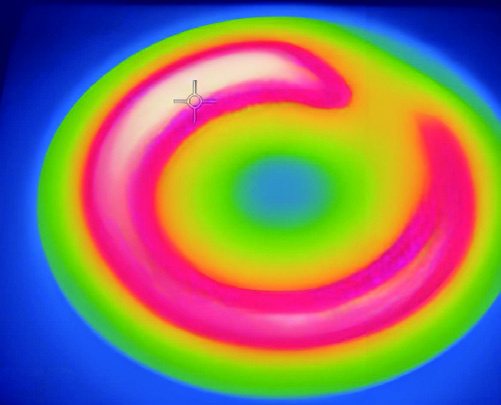
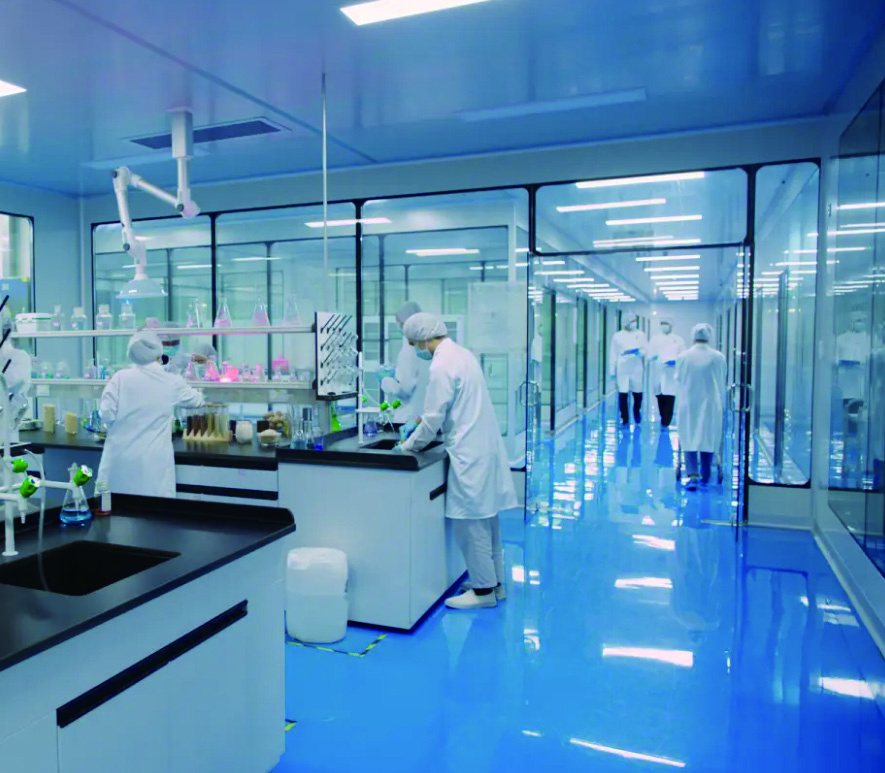
Module Selection Guide
| Scenario | Module | Key figures |
|---|---|---|
| Gas & material spectroscopy | SPECTRA S06A (SWIR) | 0.4–1.7 μm InGaAs, TEC-cooled stability |
| Material & surface discrimination | SPECTRA PL06A | Polarimetric LWIR, polarization + intensity |
| Precision thermal metrology | SPECTRA M06A (cooled 640×512) | NETD 16 mK, radiometric |
| High-resolution MWIR research | SPECTRA H10A (1024×768) | 10 μm pitch, ≤0.8 kg with lens |